Top 11 Newsletter Content Ideas to Skyrocket Engagements in 2026
You’ve probably had that moment where you open a blank page to write your newsletter and nothing comes out.
Your brain feels empty.
The truth is, you don’t need more pressure; you only need some solid ideas to pull from. And that’s what this guide is for.
In this article, I’ll share a list of proven newsletter content ideas, with real examples. This will give you the confidence to turn them into newsletters your readers actually want to open.
Email newsletters achieve an average open rate of 35.63% across various industries. But if your content feels repetitive and unimportant, that number may quickly drop.
Let’s say you keep receiving the same newsletter every week: the same tips, the same tone, the same style. Wouldn’t you get bored pretty quickly? Most of us would. Your audience feels the same way.
With Postcards Email Builder you can create and edit email templates online without any coding skills! Includes more than 100 components to help you create custom emails templates faster than ever before.
Free Email BuilderFree Email TemplatesTo avoid this, you should come up with fresh ideas every time. It gives people a reason to open, read, and act.
Let’s look at some of the most common newsletter ideas you can start using today.
1. Educational/How-To Ideas
When someone subscribes to your newsletter, it’s often because they want to learn something they can apply immediately. So in such cases, you can send how-to guides and newsletters..
For the tutorials, you can choose any one format:
- Text: Perfect for quick tips or checklists.
- Video: Great for product tutorials or step-by-step walkthroughs.
- Image/GIF series: Ideal for showcasing visual content (such as fashion, recipes, or design hacks).
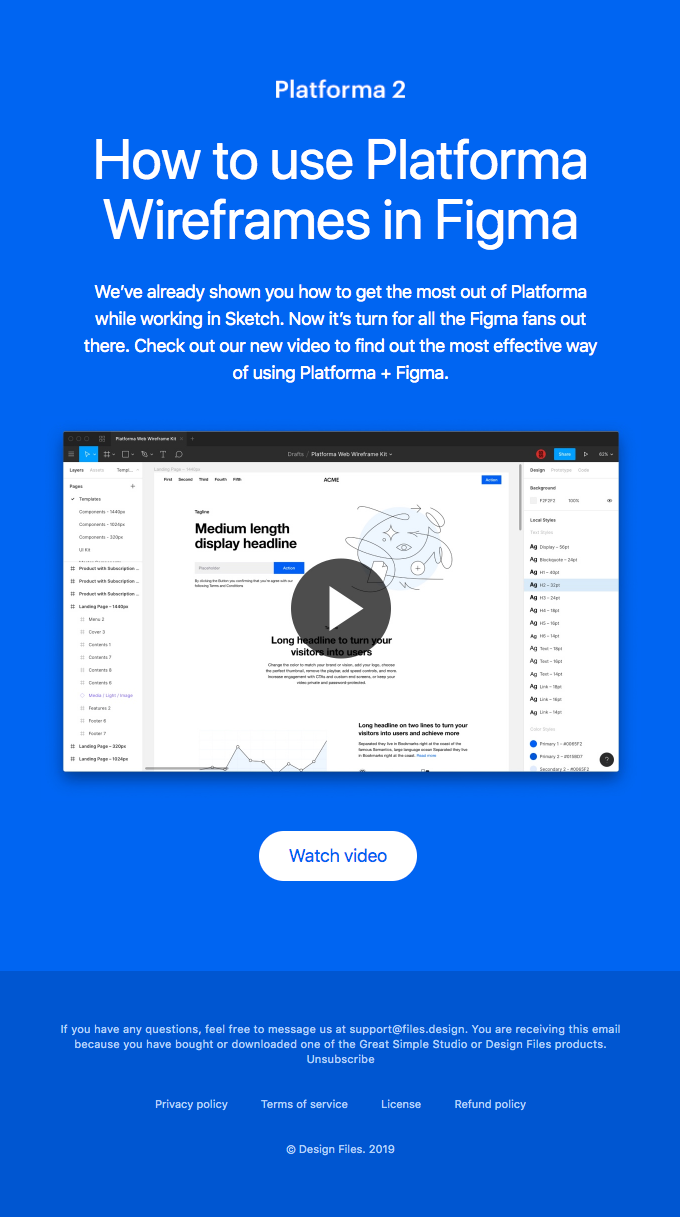
For example, the one above shows how to use Platforma in Figma with a video. Instead of simply sharing theory, you guide them through the steps in a way that allows them to apply it immediately.
2. Interactive Content (Polls, Quizzes, Feedback)
People want to share their opinions and reviews. And as a brand, you want that feedback too.
To achieve this, you can create polls, quizzes, or quick surveys within your newsletter.
Look at this email from The Freelance Coalition for Developing Countries (FCDC).
With Pulsetic you’ll be instantly notified the moment your website, API, or server becomes unavailable. Monitor uptime from multiple global locations and respond to incidents before your users are affected.
Create beautiful status pages in minutes to keep customers informed during outages and build trust with transparent communication.
Start Monitoring for Free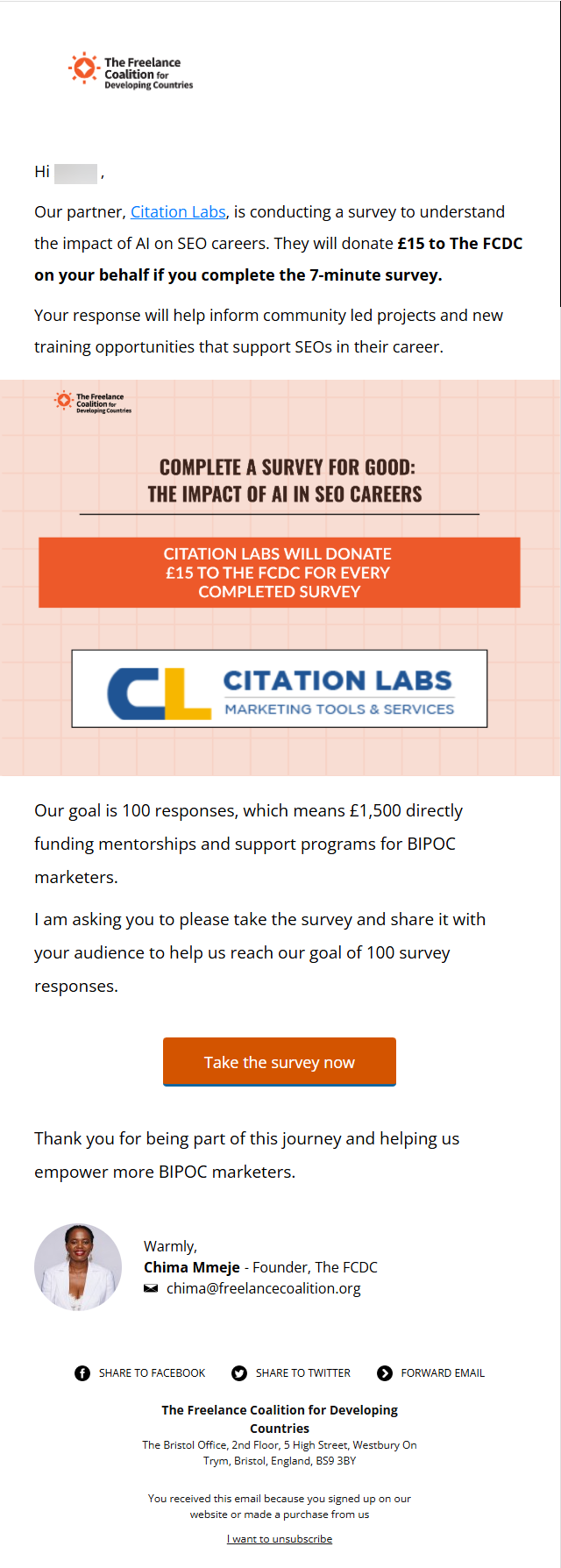
They invited subscribers to complete a short survey about the impact of AI on SEO careers. This type of interactive approach not only gathers valuable insights but also deepens engagement. This way, readers will feel their response matters.
3. Success Stories
People love to hear how others are doing well. A simple success story can be one of the most convincing types of content because it shows real results in action. And it’s more compelling than any sales pitch.
Look at this email from the Pakistan Freelancers Association.
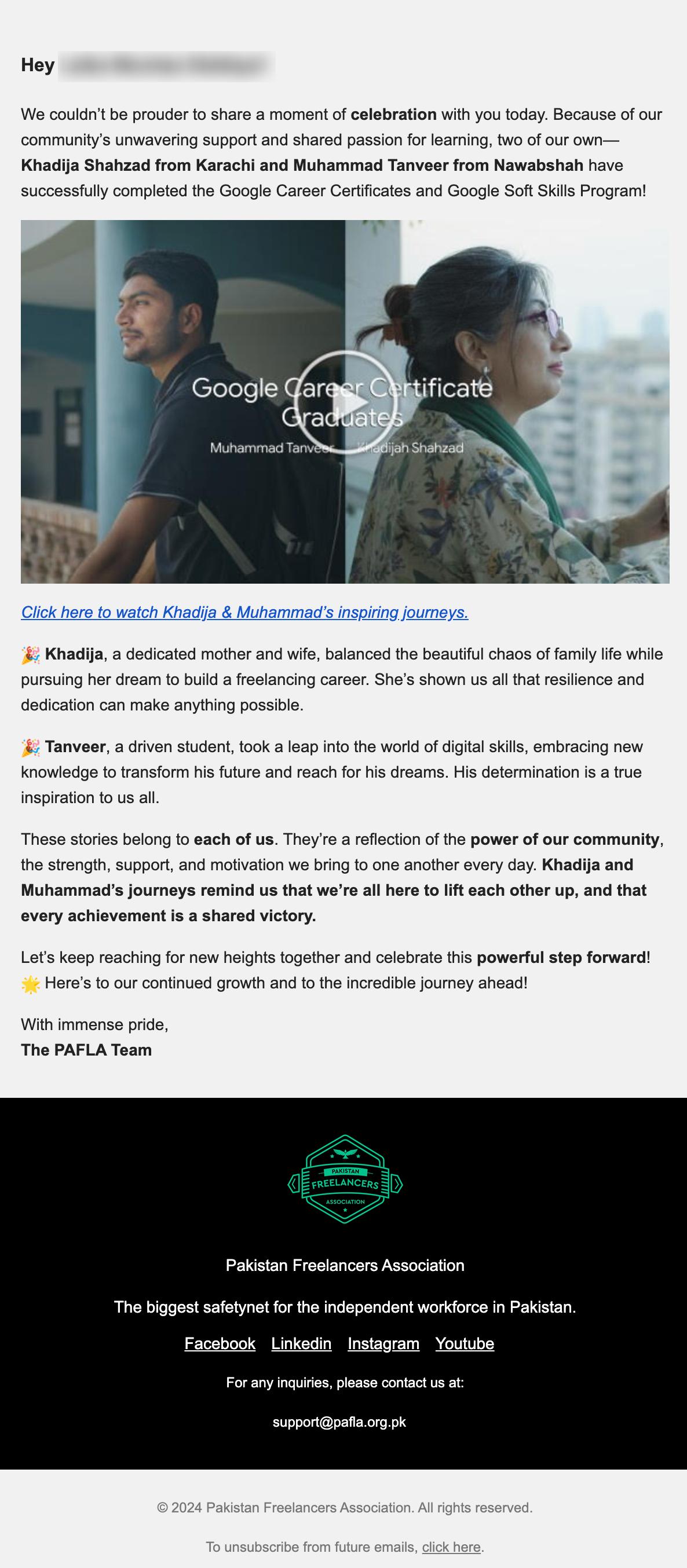
They shared the story of two members who completed Google Career Certificates, which made the story inspiring and relatable for the whole community and built trust.
4. Case Studies
Case studies go beyond a simple success story. They show the problem, the steps taken to solve it, and the results.
Take this The Rundown AI email as an example.
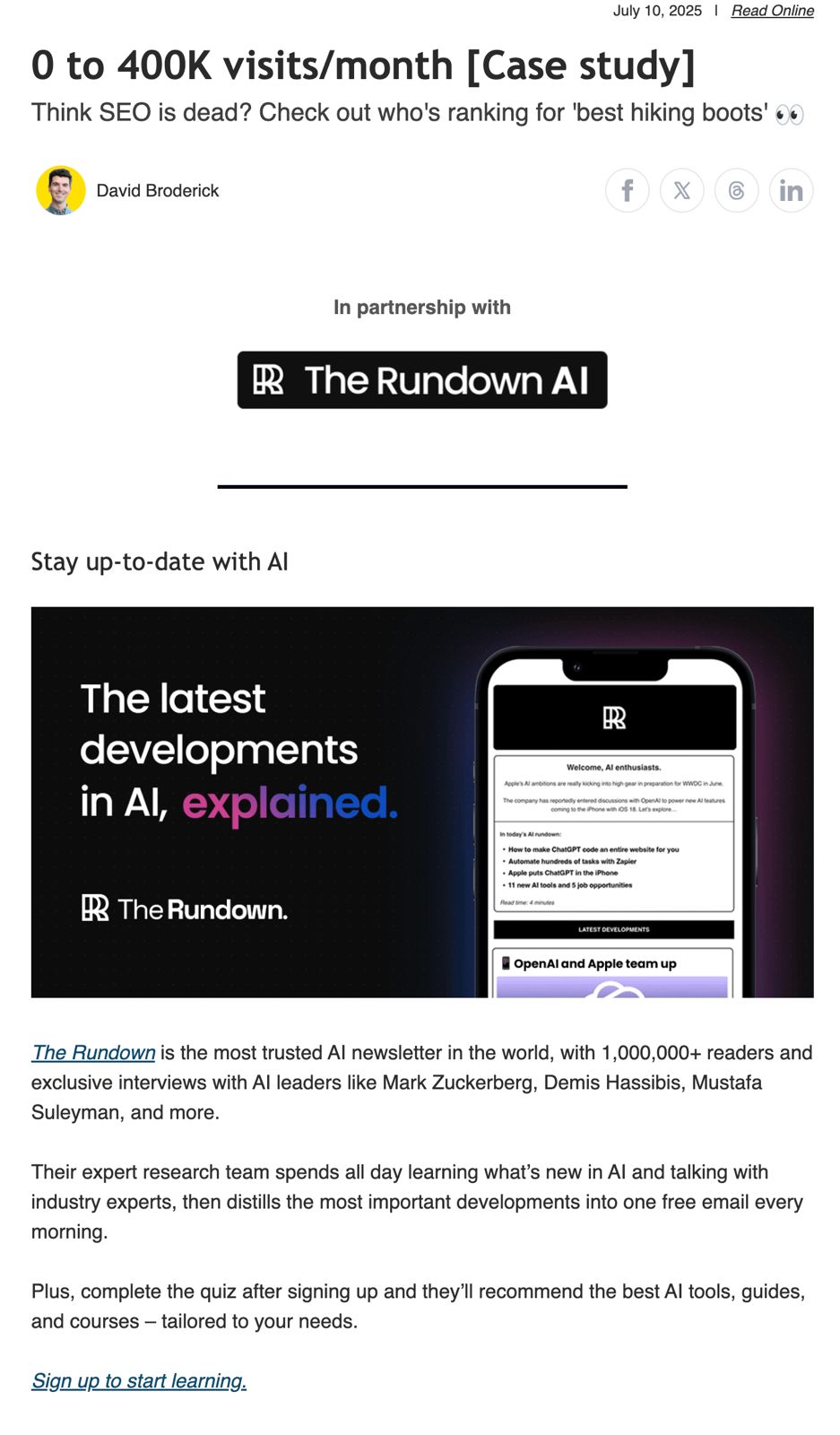
It shares the overview of how a website went from 0 to 400K visits a month.
5. Tool & Resource Roundups
Your audience is always seeking ways to save time, work more efficiently, or stay ahead. So you can share a curated list of tools, apps, or resources.
Take this email from PLM as an example.
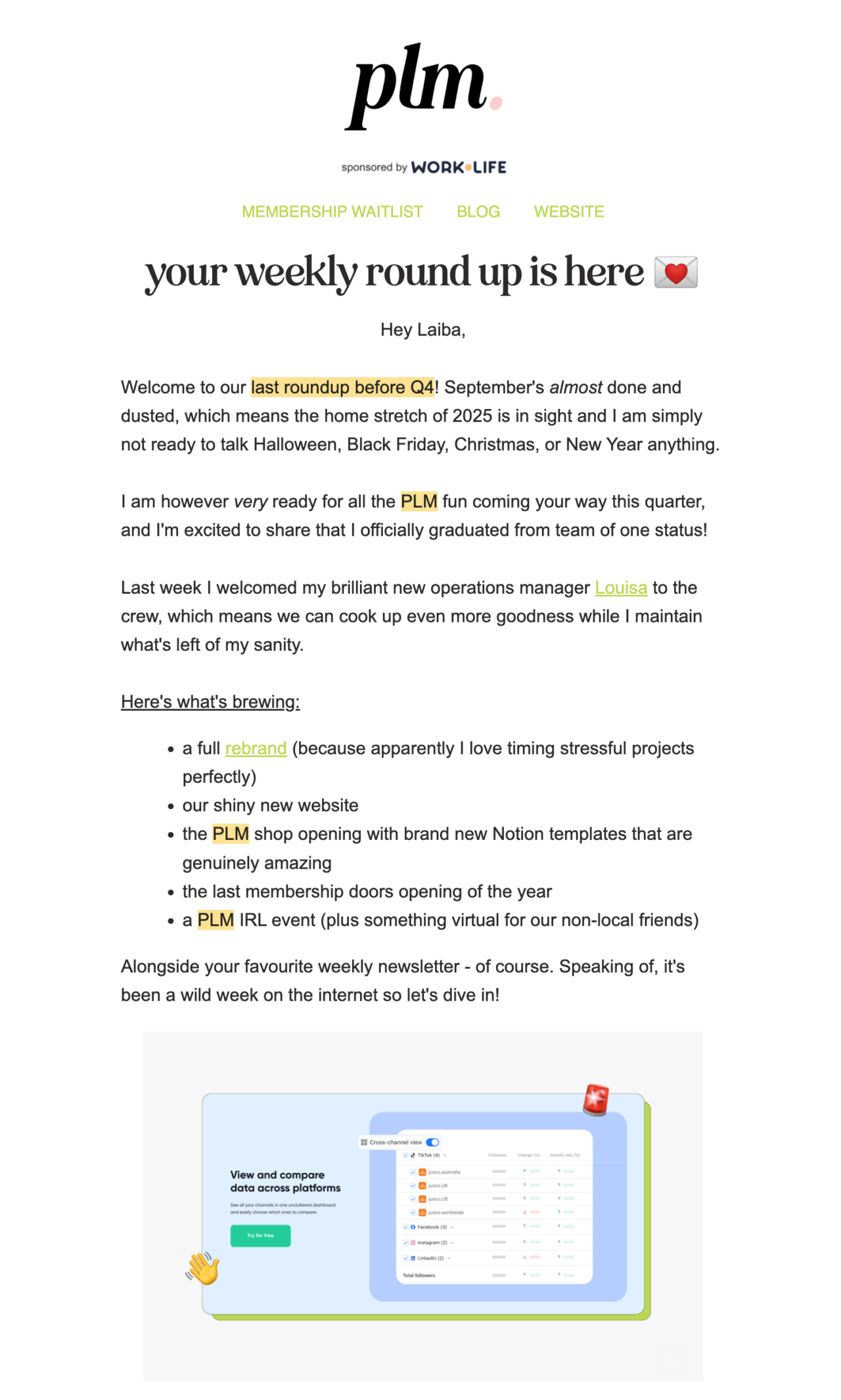
They put together a weekly roundup full of updates, tools, and resources from social media algorithms to new apps worth trying. This format saves readers’ effort and positions the newsletter as a go-to source for what matters most in their industry.
6. Offers
Use your newsletter to share exclusive perks like discounts or special deals. Keep the tone personal so readers feel rewarded, not pushed with sales.
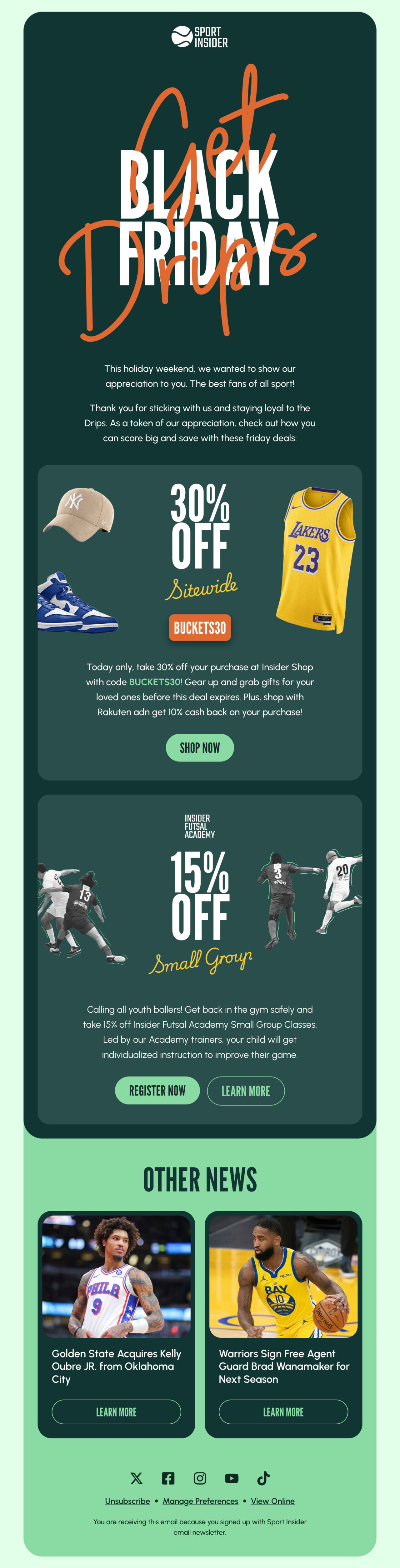
Take this email from Sport Insider as an example.
Edit this Email Template in Postcards
They promote Black Friday with clear discounts: 30% off sitewide and 15% off classes, and use bold visuals and easy-to-spot CTA buttons like Shop Now and Register Now.
7. Career Opportunities
Newsletters are a great place to share open roles or internship spots. A great example is this email from The Writer’s Job Newsletter.
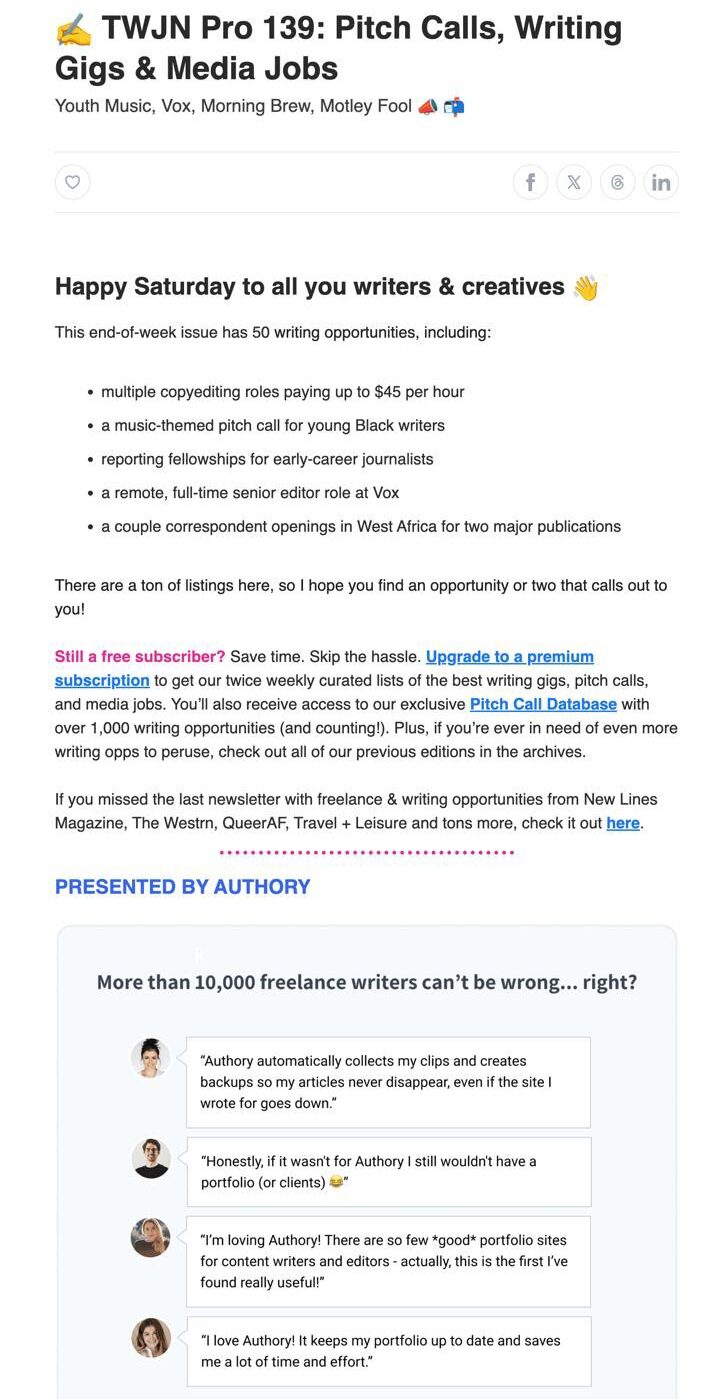
It highlights writing gigs and media jobs in a simple list format, which is easy for readers to scan for opportunities. It also shows reviews from real writers. That extra touch makes the opportunities feel credible and reassures readers that the roles are worth checking out.
8. Frequently Asked Questions (FAQ)
Answer common questions in your newsletter to save time and build trust. It shows you’re listening and helps readers get quick solutions.
This is an example email from Eman Copy.
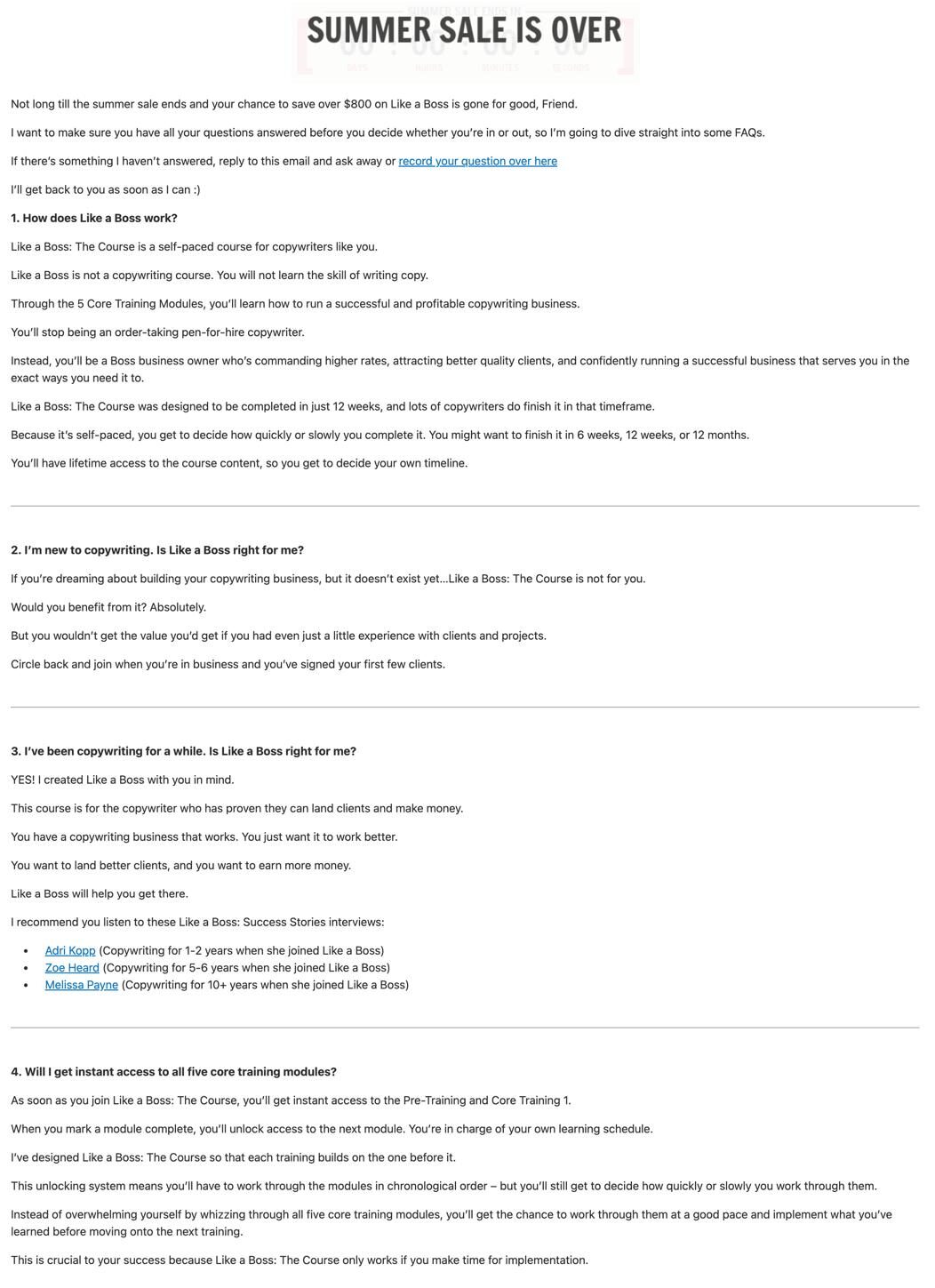
It uses the newsletter to address the most common questions about a course, from who it’s right for to how much time it takes. Instead of sending separate replies, all the answers are in one place.
9. Interviews with Experts
You can bring fresh insights to your newsletter by featuring short Q&As with industry experts. It gives your readers new perspectives and adds credibility to your brand.
Here is an email from The No BS Summit as an example.
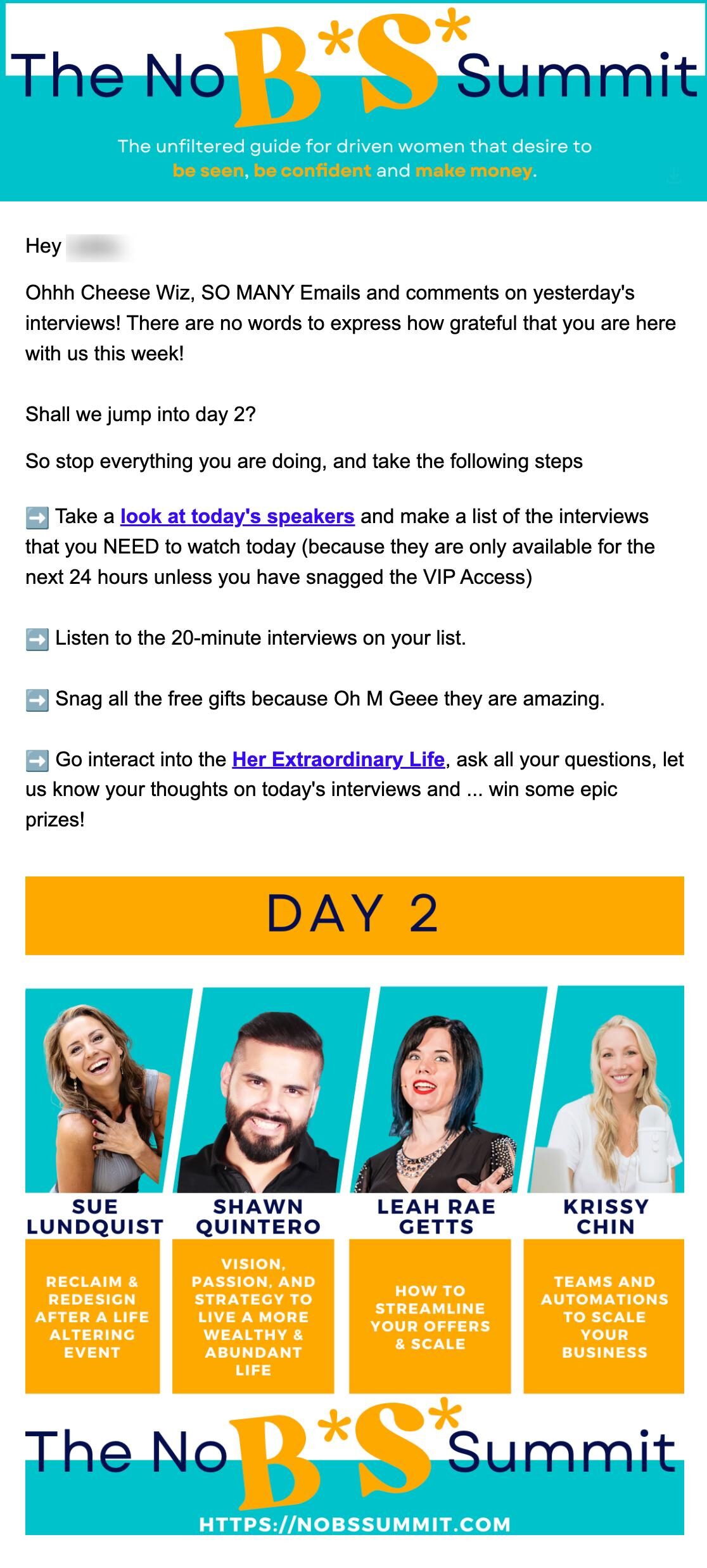
They highlighted interviews with guest speakers, showing readers what topics would be covered and why those experts matter.
10. Event Invitations
Use your newsletter to invite subscribers to webinars, workshops, or live events. It’s a simple way to boost attendance and make readers feel included.
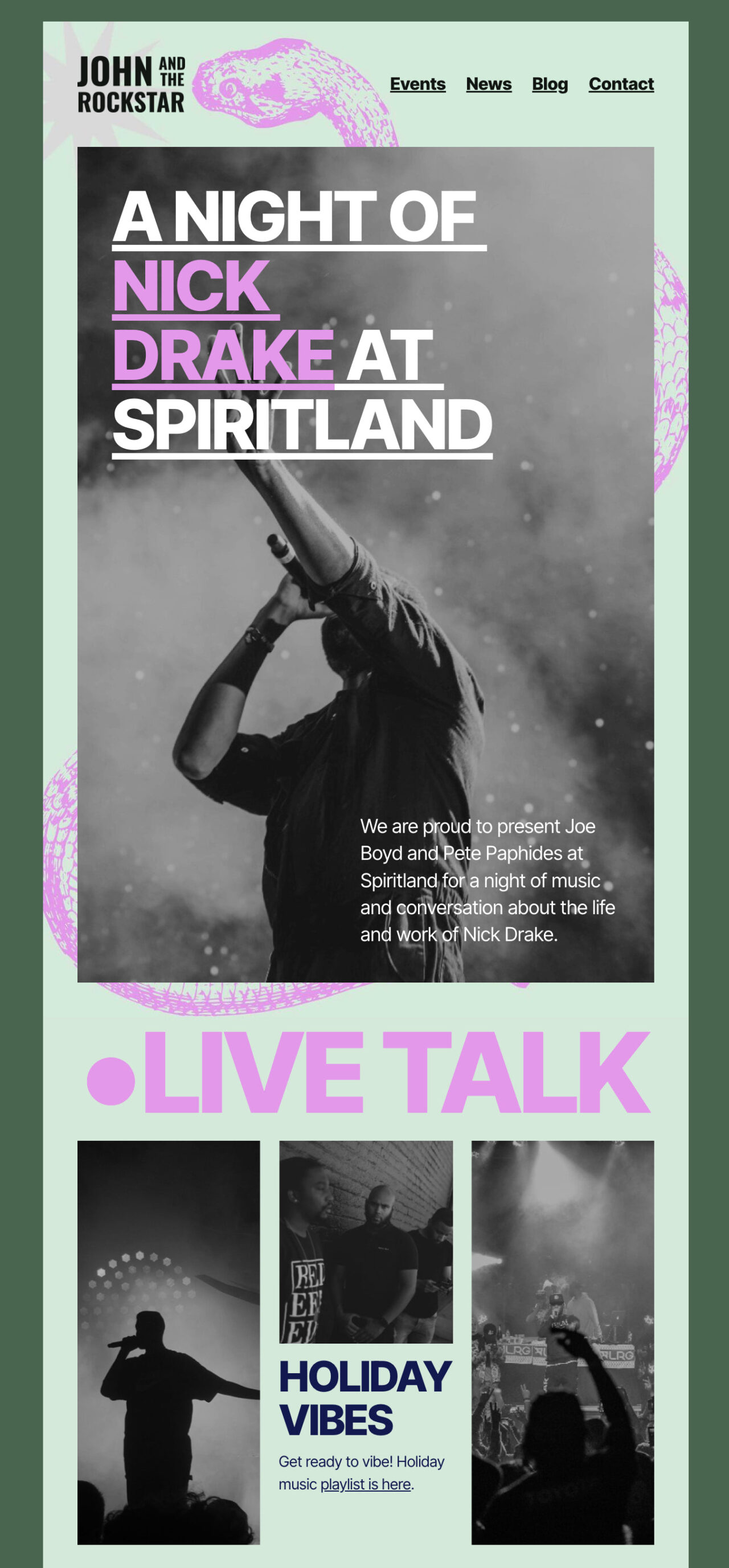
Here is an email from John and the Rockstar.
Edit this Email Template in Postcards
They used their newsletter to promote a live music event with bold visuals, artist spotlights, and a clear “Start Listening” CTA. It doesn’t just announce an event; it makes readers feel excited to be part of it.
11. Seasonal Content
Seasonal content ties your newsletter to what’s happening in the world right now. Holidays, changing weather, or cultural moments, all of it makes your content feel timely and fun.
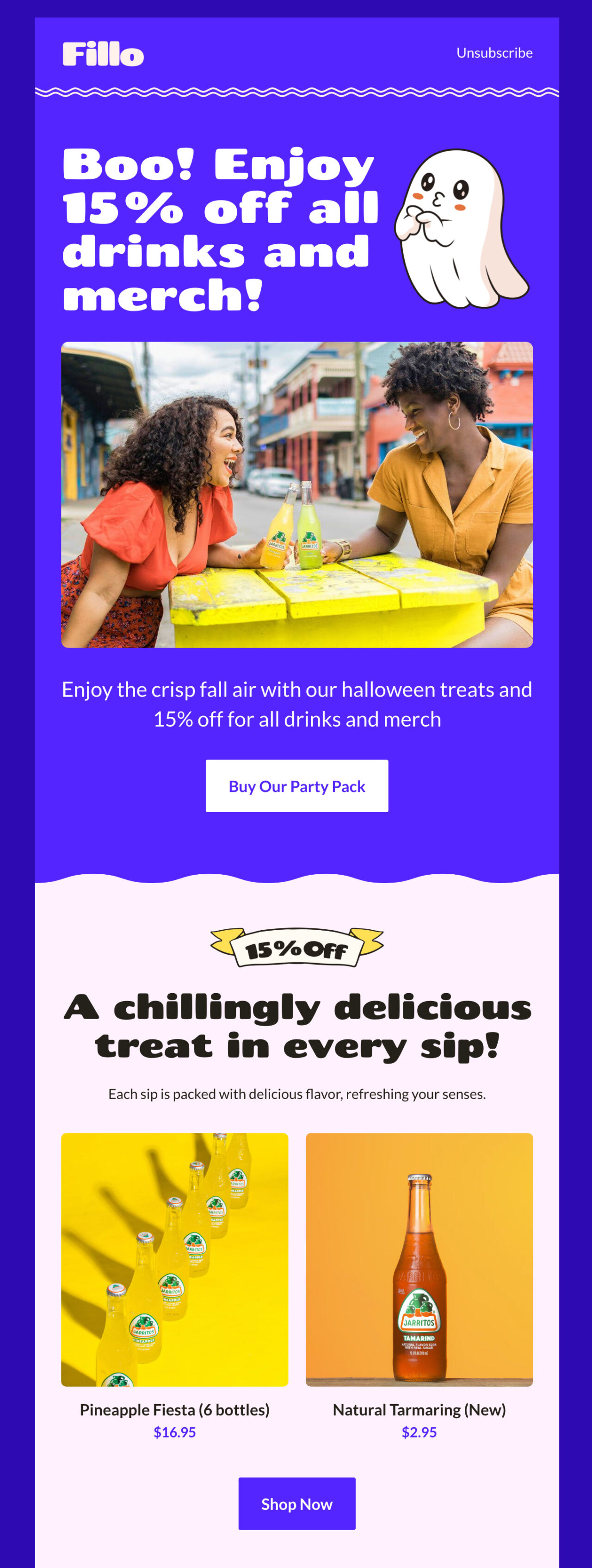
Look at this newsletter from Fillo.
Edit this Email Template in Postcards
They used a Halloween theme to promote 15% off on drinks and merch. And the playful design with seasonal angle made the offer feel relevant and exciting.
Here are five ways to make sure you’re choosing the right content every time:
Understand Your Audience
Start with your readers:
- Beginners often want easy guides, step-by-step tips, or quick wins.
- More experienced readers may prefer deep dives, expert opinions, or industry updates.
- Instead of guessing, use data.
Look back at your past newsletters, see which subject lines had the highest open rates and which links people clicked most. You can also check your website and social media to see what topics already get attention.
Set Clear Goals
Your newsletter should always serve a purpose. Ask yourself: What do I want this newsletter to achieve? If your goal is to:
- educate, tutorials and how-tos are a great fit.
- get more sales, case studies, product showcases, or discounts make more sense.
- build a community, share behind-the-scenes stories or polls.
Understanding your goals this way keeps your ideas focused and makes it easier to measure results.
Plan Your Content
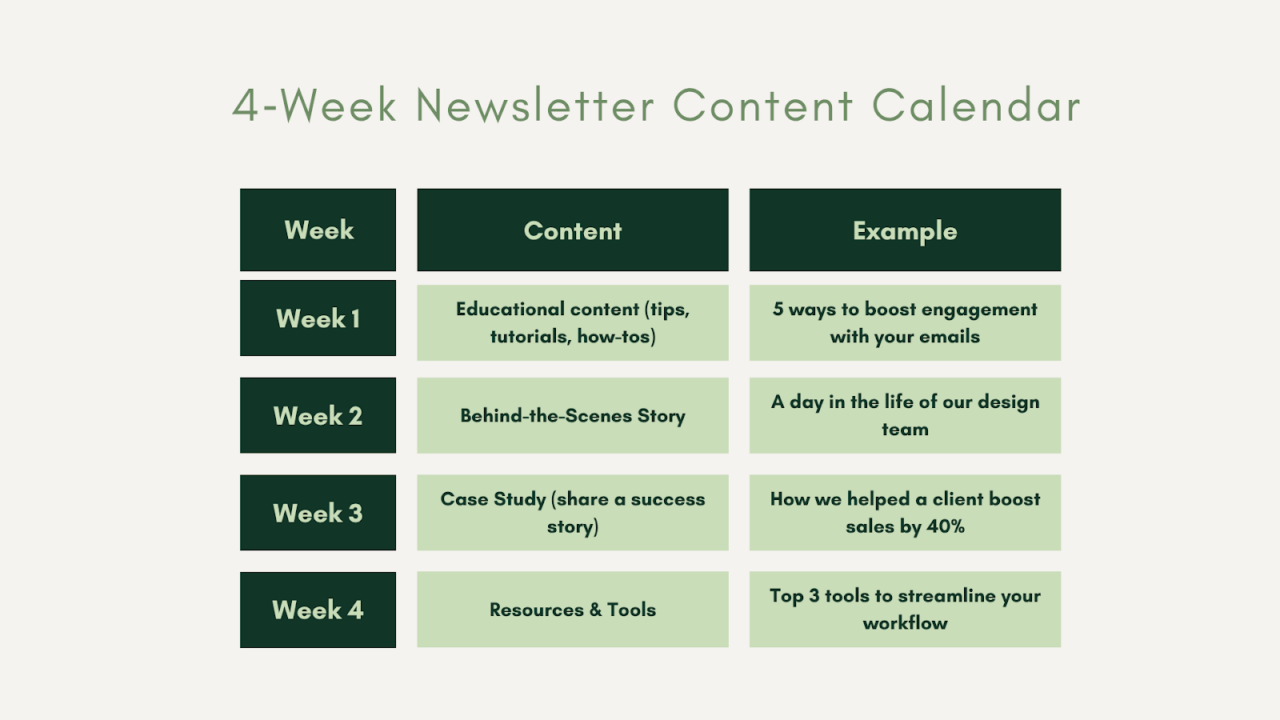
Last-minute ideas often feel rushed and you may end up creating uneven content. To avoid this, create a content calendar. This gives you structure and takes away the stress.
For example, you can set week 1 for tips, week 2 for a story, week 3 for a case study, and week 4 for resources. A clear plan like this keeps your newsletters consistent
To help you put these ideas into action, here’s a sample 4-week content calendar you can use.
Once you know what to send, the next step is to ensure your newsletters are actually opened, read, and clicked.
Here are a few best practices to guide you:
- 43% of people open emails only because of the subject line. So keep it short (under 70 characters).
- Mix up your formats to keep things interesting. Use text for quick tips, visuals for tutorials, or short videos for demos.
- Try to include a single CTA in your newsletter because it tells readers what to do next, such as “Join the webinar” or “Download the guide,” and it also increases conversion rates by 1617%.
- Include the reader’s name in the greeting. It instantly grabs attention and makes your email feel like it was written just for them.
- The time you hit “send” matters. An email sent on Tuesdays and Thursdays achieves the highest open rates, compared to other days. Test a few days and times to find when your readers are most likely to open.
- When you’re unsure which subject line or CTA will work better, send two versions to small groups of your list and use the one that performs best.
At some point, almost all of us run out of ideas. But the good thing is, you don’t always need to start from scratch.
Here are a few ways to keep ideas flowing:
- Batch Your Work: Set aside time once a month to brainstorm and plan multiple ideas at once. This reduces the stress of generating new ideas on the spot.
- Repurpose Content: You must have already published a blog, video, or social post. You can turn them into a newsletter. A quick summary, a new angle, or even a short “best of” roundup can keep your content full.
- Use the Right Tools: Organize ideas in tools like Notion or Trello so nothing gets lost. You can also use AI writing assistants to brainstorm headlines or draft sections when you’re stuck.
Now that you’ve got the ideas, it’s time to turn them into a newsletter your audience will actually want to read.
With Designmodo, you can do it in only a few steps.
Visit Designmodo’s email template builder software, log in, and select an email template that suits your style. Then, drag and drop the blocks you need within our Postcards editor, add your text, images, and links, and make quick tweaks to ensure the design matches your brand.
And that’s it!
You’ll have a newsletter that looks professional on any device. No coding or design skills needed. It’s a simple way to take your content from draft to polished newsletter, without the headache.
FAQs
Free guides, checklists, templates, discounts, or exclusive access to content are popular because all you have to do is make it useful and tied to your brand.
The first person (“I” or “we”) feels more personal and fosters a connection. Third person works for formal updates, but the first person usually wins in engagement.
- Some of the biggest mistakes include:
- Weak content or unclear format
- Hidden subscribe form
- Too many links in one email
- Value not explained clearly
- Lack of social proof
- Promotions that feel untrustworthy
Most brands send weekly or bi-weekly. The key is consistency. Choose a schedule you can maintain without overwhelming your audience.